Mahmoud Darwish. Antithesis to Edward Said.
He says: I am from there. I am from here
But neither am I there, nor here.
I have two names. They meet and they depart.
And two languages, I have forgotten in which I used to dream.
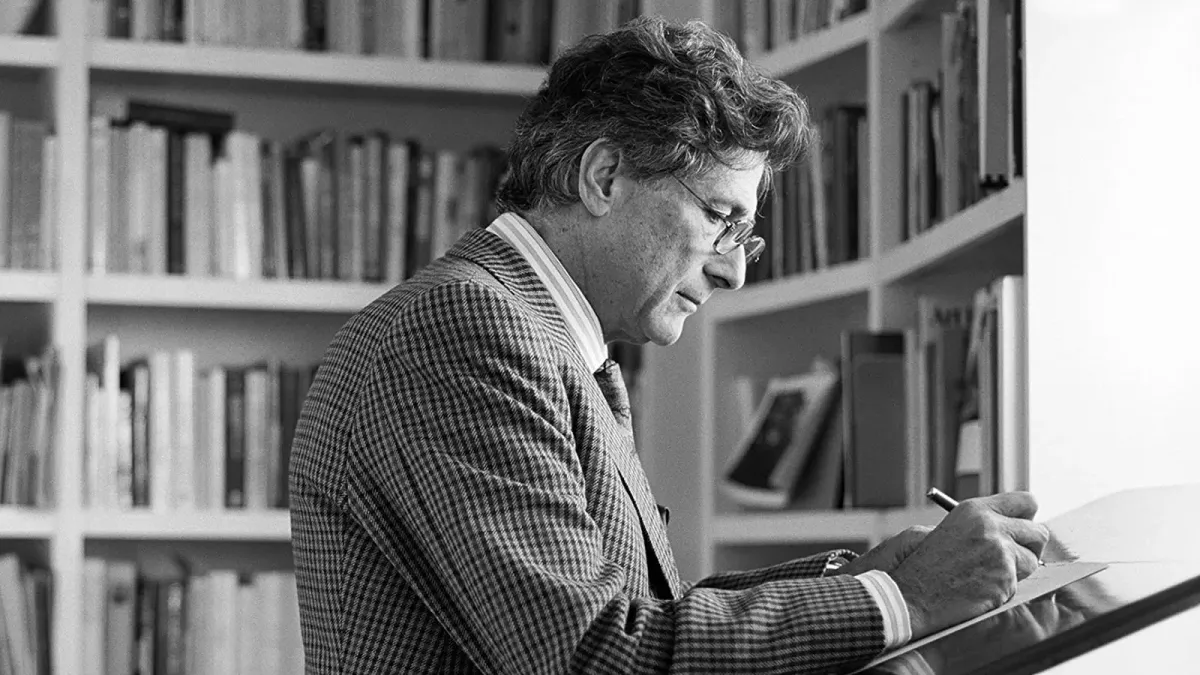
Edward W. Said, Palestinian writer and critic. Mahmoud Darwish, Palestinian writer and poet. Pillars of the same people, bound in life by a profound friendship. After the passing of the first - following the tradition that has accompanied Arabic poetry since pre-Islamic times - the latter dedicates an elegy to his memory. The title is Antithesis.
Darwish speaks on behalf of his friend. He delves into his deepest feelings and uproots his most intimate impulses. The desire for reconciliation with one’s own identity, the human need to feel a sense of belonging.
What is the identity of a man who has been deprived of his homeland?
During his life in Cairo, a young Said collides with the harsh reality of the Palestinian refugees. The impact is painful, indelible: the coldness and emptiness etched on the faces of those women, men, and children will mark him forever. It is at this moment that he begins to question his own identity. The trauma of 1948 weighed heavily on the Palestinian people, imposing on them a new, visceral need to redefine themselves and their identity, to rethink the concept of home - and with it, its antithesis: the concept of exile.
He says: I am from there. I am from here
But neither am I there, nor here
Exile, the splitting of a being into two parts. A hybrid identity: the essence with which Edward Said identifies himself.
I have two names. They meet and they depart
And two languages, I have forgotten in which I used to dream
A disarming emblem of the condition of Palestinian refugees forced into exile, who witness the shattering of the thread that connects their soul to their homeland - the very thread that defined their identity. How does one act? To whom does one belong now?
Said is together Palestinian and American; he accepts it. He even assimilates it in his name, a mirror of his relationship with his identity: Edward, typically American, paired with Said, typically Arab. He will learn to embrace exile and transform it into a symbol of existence itself, of the ongoing quest for one’s own identity:
Identity is the offspring of birth, but
In the end, it is the creative act of its owner.
It is not a vestige of the past. I am multi-dimensional.
Said’s goal is to reject the narrative that portrays Palestinians as powerless, helpless victims crushed by a collapsing past, and instead to highlight the strength of a people who - despite humiliation and oppression - have managed to forge a new reality.
Accepting a condition, however, does not necessarily mean weakening the embryonic bond with one’s homeland. The essence is inevitably split; it is the price of exile. Yet the homeland in which his identity is rooted remains always the same: the motherland, Palestine. His will once again becomes one, reforged by the warmth of the desire to return. “I never feel at home” but “always in the wrong place” - the title of his autobiography - Said declares, despite the comfortable life he leads in New York.
This excerpt reveals the difficulty of defining one's identity, particularly for those who have been forced to leave their homeland. Exile, the splitting of a man into two halves. Edward Said’s identity exists in a “third dimension” in this “middle ground” between two lands, two cultures, two languages:
The external world is an exile
So is the internal world
And between them, who are you?
I do not define myself lest I lose myself. I am what I am.
I am my other in a dualism
Of harmony between words and intimation.
Had I been writing poetry, I would have said:
I am two in one
Like the two wings of a sparrow
Mahmoud Darwish, Anthitesis to Edward Said.


Comments ()